Arabidopsis thaliana
In brief
Arabidopsis thaliana is a small annual flowering plant in the mustard family, Brassicaceae. [1]
Evidence for this statement
Editorial synthesis
Where to check this statement
- evidence id
- A06-K
- locator
- Accepted-name header; family; Flora of Tropical East Africa: General
Arabidopsis: plant, leaf and flowers
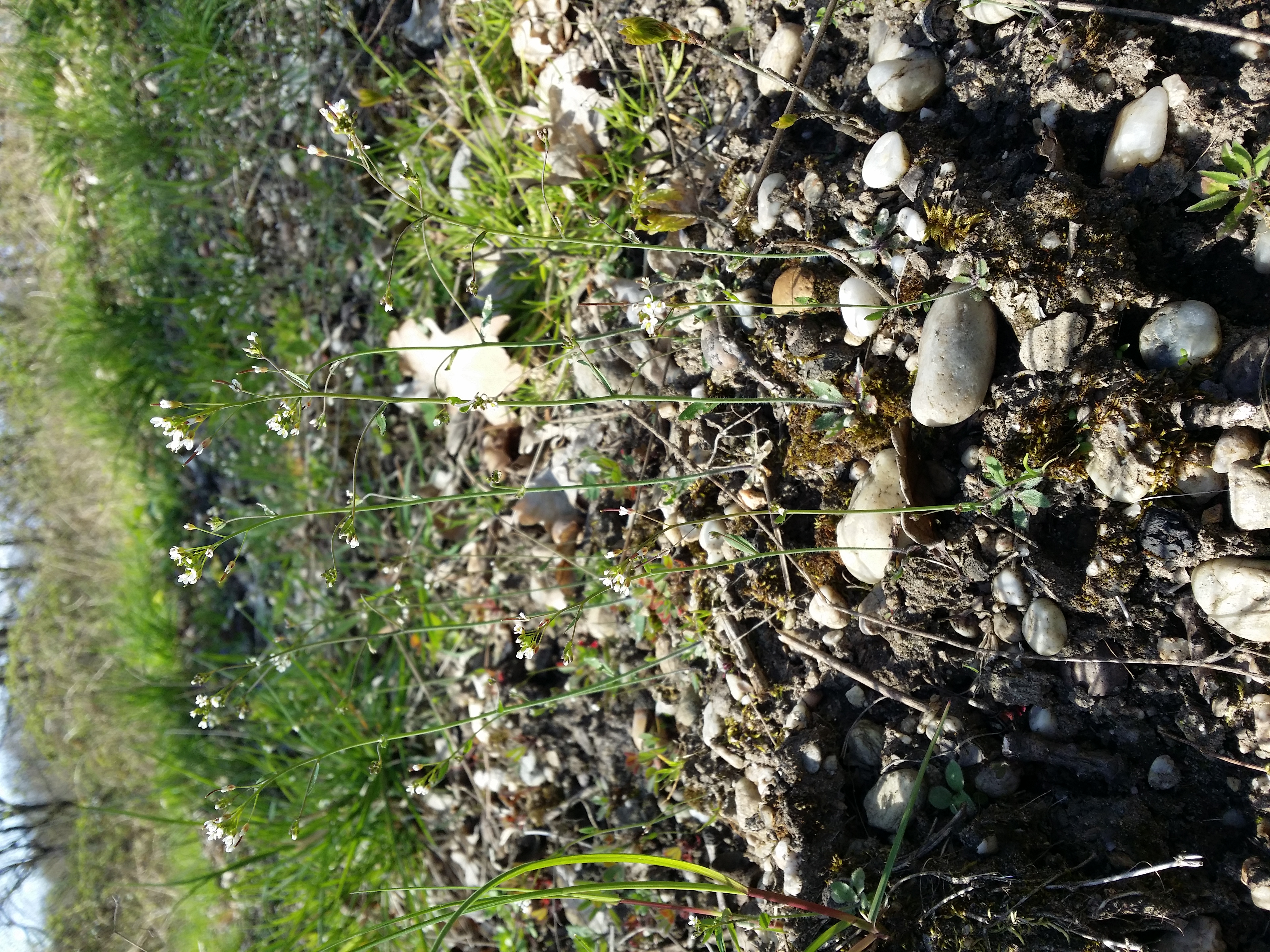

Source and caption
Flowering plants in their habitat; other background species are present and roots are not visible.
Processing: Original JPEG bytes retained; browser applies embedded EXIF orientation.SHA-256: 14a93955349e46eb080a7cbc9c0ce56f2be27e61e46c8757c86d12191c315056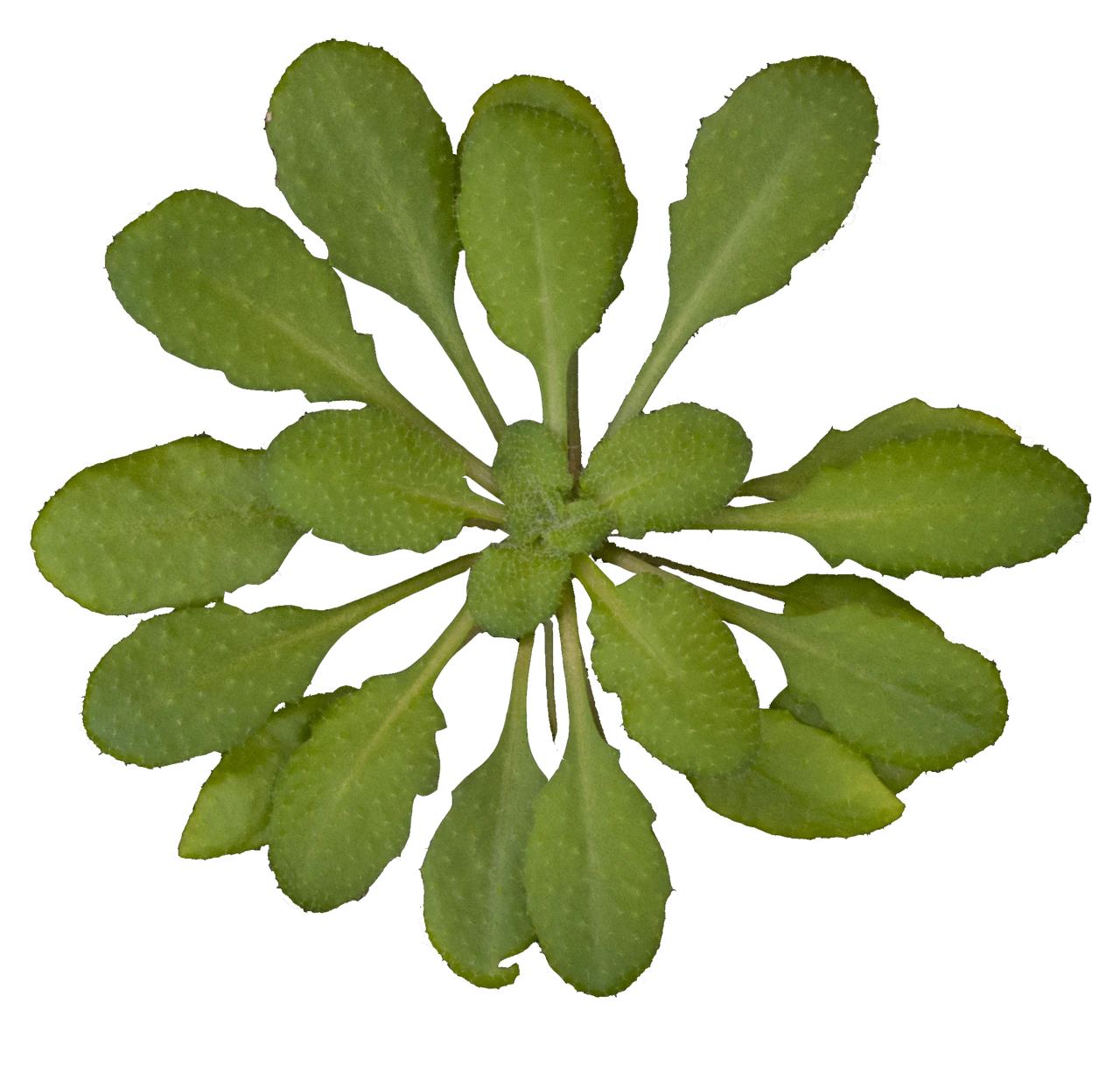

Source and caption
Leaf rosette; age and genotype are unspecified.
Processing: Resized and encoded as WebP; original transparent background retained.SHA-256: 3e2c633e63cc1919c9c03a265c455643863ea2a4984aa0e5561d7cec132c235a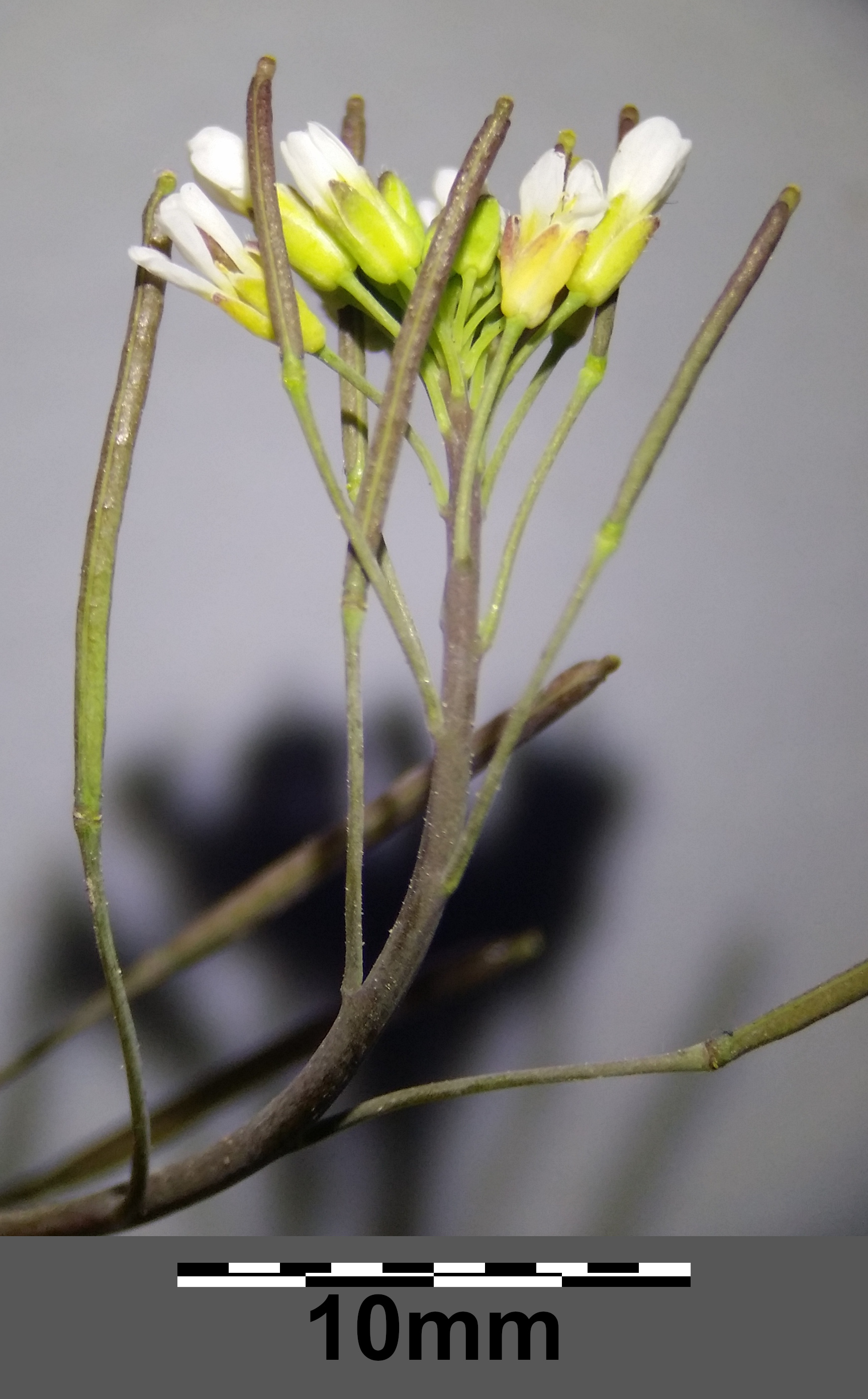

Source and caption
Flowers and developing fruits; the original 10 mm scale is retained.
Processing: Original JPEG bytes retained; browser applies embedded EXIF orientation.SHA-256: 39089d4ef53fdff7f0c449bd0704311751ad96da09ab2e991d23d89e47cd61d3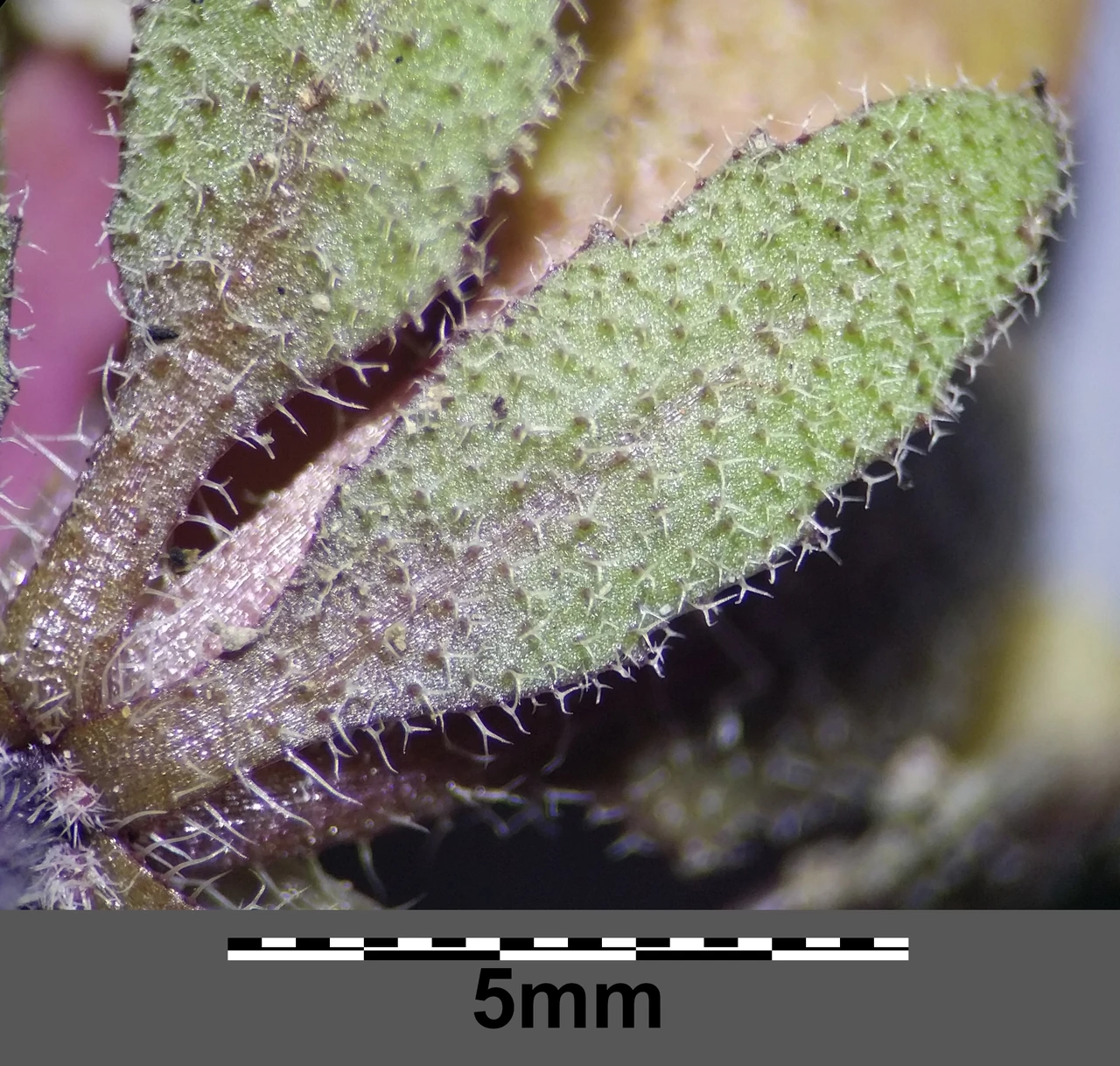

Source and caption
Basal leaf; the original 5 mm scale is retained.
Processing: Resized and encoded as WebP; original 5 mm scale retained.SHA-256: 8f288e04a919f8146fa0f5b4f9a83960482bda597e0530ca1af831bb85990223These images show different specimens. Commons photographs do not establish a genotype, age or a link to the measured Col-0 leaves.
Photographs and illustrations
Save, investigate and check this version
Editorial draft · human review pending
Ask about this materialOn this page
Introduction
It is both a wild plant of open ground and an experimental organism used to study plant growth and gene function.
[1]Evidence for this statement
Editorial synthesis
Where to check this statement
- evidence id
- A06-K
- locator
- Kew Species Profiles: Ecology; introductory research description
How to recognize the plant
A young plant forms a low rosette of leaves, followed by an upright flowering stem with fewer, smaller leaves.
[1]Evidence for this statement
Editorial synthesis
Where to check this statement
- evidence id
- A06-K
- locator
- Flora of Tropical East Africa: General, Stem, Leaves
The basal leaves are often spoon-shaped and hairy, while the upper leaves are narrower and attached without a stalk.
[1]Evidence for this statement
Editorial synthesis
Where to check this statement
- evidence id
- A06-K
- locator
- Flora of Tropical East Africa: Leaves
Its small flowers have four white petals, four sepals and six stamens.
[1]Evidence for this statement
Editorial synthesis
Where to check this statement
- evidence id
- A06-K
- locator
- Kew Species Profiles: Description
After flowering, narrow fruits called siliques hold small reddish-brown seeds.
[1]Evidence for this statement
Editorial synthesis
Where to check this statement
- evidence id
- A06-K
- locator
- Flora of Tropical East Africa: Fruits and Seeds
Reproduction and the annual cycle
Arabidopsis is predominantly self-fertilizing: pollen from a plant can fertilize its own flowers.
[2]Evidence for this statement
Editorial synthesis
Where to check this statement
- evidence id
- A06-P
- locator
- Abstract; Introduction: switch from self-incompatibility to self-compatibility
This is sexual reproduction through pollen and fertilization, rather than the production of seed without fertilization.
[2]Evidence for this statement
Editorial synthesis
Where to check this statement
- evidence id
- A06-P
- locator
- Introduction: pollen recognition; Methods: Pollination Assays
Research on different Arabidopsis accessions has linked self-fertility to independently arising changes in the system that otherwise rejects self-pollen.
[2]Evidence for this statement
Editorial synthesis
Where to check this statement
- evidence id
- A06-P
- locator
- Abstract; Results: Analysis of pseudo-S-locus haplotypes; Discussion: independent origins
The annual plant eventually produces seed and dies, but its seasonal schedule is not a single fixed calendar.
[1]Evidence for this statement
Editorial synthesis
Where to check this statement
- evidence id
- A06-K
- locator
- Flora of Tropical East Africa: General; Kew Species Profiles: Cultivation
In studied wild populations in Sweden and Italy, seeds germinated in autumn and plants overwintered as rosettes before flowering.
[3]Evidence for this statement
Editorial synthesis
Where to check this statement
- evidence id
- A06-A
- locator
- Materials and Methods: Study sites and seed collection
Flowering occurred earlier in the Italian population than in the Swedish population, illustrating why a local life cycle needs its environmental context.
[3]Evidence for this statement
Editorial synthesis
Where to check this statement
- evidence id
- A06-A
- locator
- Materials and Methods: Study sites and seed collection; Results: Flowering time
Where it grows and how populations differ
Kew places its native range across temperate Eurasia and into the mountains of tropical Africa, with introductions elsewhere.
[1]Evidence for this statement
Editorial synthesis
Where to check this statement
- evidence id
- A06-K
- locator
- Accepted-name header; Flora of Tropical East Africa: Distribution
Recorded habitats include rocky or sandy open ground and disturbed places such as gardens and railway margins.
[1]Evidence for this statement
Editorial synthesis
Where to check this statement
- evidence id
- A06-K
- locator
- Kew Species Profiles: Geography and distribution; Ecology
A five-year reciprocal-transplant experiment compared plants originating from one Swedish and one Italian population at both home sites.
[3]Evidence for this statement
Editorial synthesis
Where to check this statement
- evidence id
- A06-A
- locator
- Summary; Materials and Methods: Study sites and seed collection
The local plants had higher reproductive fitness in eight of ten site-by-year comparisons, with no significant difference in the other two.
[3]Evidence for this statement
Editorial synthesis
Where to check this statement
- evidence id
- A06-A
- locator
- Summary: fitness comparisons
Here fitness was estimated from fruit production per planted seed or seedling, so the result describes those populations and that measure rather than every Arabidopsis population.
[3]Evidence for this statement
Editorial synthesis
Where to check this statement
- evidence id
- A06-A
- locator
- Summary; Discussion: fruit production as fitness estimator
Why researchers use it
Arabidopsis research connects changes in genes with measurable changes in an entire plant, including its growth and developmental timing.
[4]Evidence for this statement
Editorial synthesis
Where to check this statement
- evidence id
- A06-B
- locator
- Abstract: purpose and phenotype framework
Boyes and colleagues established a growth-stage approach using Columbia plants and selected mutants, pairing early seedling observations with measurements of soil-grown plants.
[4]Evidence for this statement
Editorial synthesis
Where to check this statement
- evidence id
- A06-B
- locator
- Abstract: two platforms; Col-0 and selected mutants
Such comparisons distinguish a change in development from a difference caused merely by observing plants at different stages.
[4]Evidence for this statement
Editorial synthesis
Where to check this statement
- evidence id
- A06-B
- locator
- Abstract: developmental landmarks and interpretation of phenotypic differences
Self-fertilization experiments and field transplants show two complementary uses of the species: testing reproductive mechanisms and examining adaptation in natural environments.
[2] [3]Evidence for this statement
Editorial synthesis
- PLOS Genetics · 10.1371/journal.pgen.1000426
- New Phytologist/Wiley · 10.1111/j.1469-8137.2012.04112.x
Where to check this statement
- evidence id
- A06-P
- locator
- Abstract; Results: transgenic self-incompatibility
- evidence id
- A06-A
- locator
- Summary: reciprocal-transplant experiment
Reproductive mechanism and experimental scope
Boggs and colleagues introduced the Arabidopsis lyrata SRKb–SCRb gene pair into selected Arabidopsis thaliana accessions to test restoration of self-incompatibility.
[2]Evidence for this statement
Editorial synthesis
Where to check this statement
- evidence id
- A06-P
- locator
- Results: Identification of accessions that express stable transgenic SI
Their pollination assays assessed pollen-tube responses, and restoration differed between accession backgrounds.
[2]Evidence for this statement
Editorial synthesis
Where to check this statement
- evidence id
- A06-P
- locator
- Introduction: accession phenotypes; Methods: Pollination Assays
This links a reproductive phenotype to a particular recognition system without treating all accessions as genetically identical.
[2]Evidence for this statement
Editorial synthesis
Where to check this statement
- evidence id
- A06-P
- locator
- Discussion: independent S-locus changes and modifier loci
What the field experiment establishes
The reciprocal-transplant study used one maternal line from each of two populations, with seeds planted in the first three years and seedlings in the final two.
[3]Evidence for this statement
Editorial synthesis
Where to check this statement
- evidence id
- A06-A
- locator
- Materials and Methods: Study sites and seed collection; Summary
Differences in survival and reproduction supported local adaptation, but the experiment was not a survey of all native populations.
[3]Evidence for this statement
Editorial synthesis
Where to check this statement
- evidence id
- A06-A
- locator
- Results: Overall fitness; Discussion
Comparing developmental observations
The Boyes study combined a two-week seedling platform with soil-based measurements extending for approximately two months.
[4]Evidence for this statement
Editorial synthesis
Where to check this statement
- evidence id
- A06-B
- locator
- Abstract: platform durations
These are experimental observation windows, not a species-wide promise of the number of days from seed to seed.
[4]Evidence for this statement
Editorial synthesis
Where to check this statement
- evidence id
- A06-B
- locator
- Abstract: platforms in Col-0 and selected mutants
The accessible publisher abstract identifies the study design but does not supply the detailed stage tables, so no stage-specific day counts are asserted here.
[4]Evidence for this statement
Editorial synthesis
Where to check this statement
- evidence id
- A06-B
- locator
- Publisher page: Abstract; no full text in article-minimal view
From this article to your own question
Choose a statement in this article and open its evidence. Record whether it concerns the whole species, a particular specimen or specific study conditions. Then follow a suitable guide to preserve identifiers and state which evidence your question still needs.
Evidence for this statement
EcoGenesis
Continue exploring
Sources and versions
Editorial draft · human review pending
- Kew POWO · urn:lsid:ipni.org:names:277970-1
2026-09-06 · Record components differ: flora/profile CC BY-NC-SA 3.0; backbone CC BY 3.0; individual photo copyright.
Provenance and original
- Location in the original source
- Accepted-name header; Flora of Tropical East Africa: General, Stem, Leaves, Inflorescences, Flowers, Fruits, Seeds, Ecology, Distribution; Kew Species Profiles: Description, Geography and distribution, Cultivation, Ecology; attached source credits.
- PLOS Genetics · 10.1371/journal.pgen.1000426
2026-09-06 · Publisher states Creative Commons Attribution License; exact version not resolved here.
Provenance and original
- Location in the original source
- Abstract; Author Summary; Introduction; Results: Identification of accessions with stable transgenic SI and Analysis of pseudo-S-locus haplotypes; Discussion paragraphs on independent origins and unstable QTL; Methods: Plant Growth Conditions and Transformations, Pollination Assays, Analysis of pseudo-S loci.
- New Phytologist/Wiley · 10.1111/j.1469-8137.2012.04112.x
2026-09-06 · Free access is not a blanket reuse license; no figures/data redistributed.
Provenance and original
- Location in the original source
- Summary; Materials and Methods: Study sites and seed collection and statistical-analysis paragraphs; Results: Temperature, Overall fitness, Relative survival vs winter temperature, Flowering time; Discussion; supplementary descriptions only.
- The Plant Cell/Oxford Academic · 10.1105/TPC.010011
2026-09-06 · © 2001 American Society of Plant Biologists; standard publication model.
Provenance and original
- Location in the original source
- Publisher minimal article page: title, citation, DOI, dates, complete Abstract, copyright statement.
Inspect structured data
- Content version
- f4d6152802828da1cb54838adaf02b64b9d5532b0279f3bad520146072ad22f8
- Source version
- editorial-source-set.v1@dd5966b3d611d5896e6d85adac2d1b11bc22fb250d571db56d0a22b18e29b76e
- Updated
- 2026-09-19