species · Editorial draft · human review pending
Arabidopsis thaliana
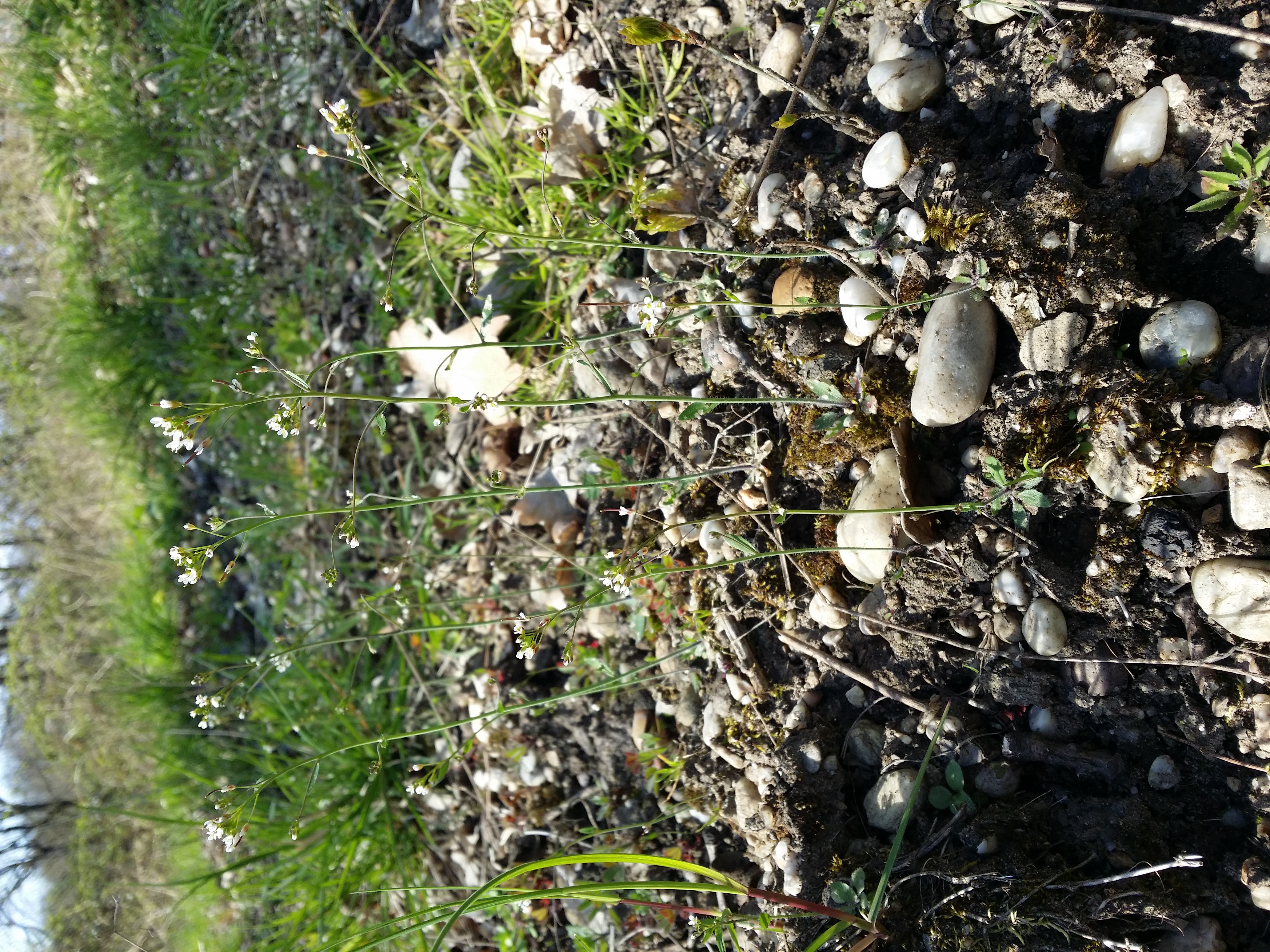
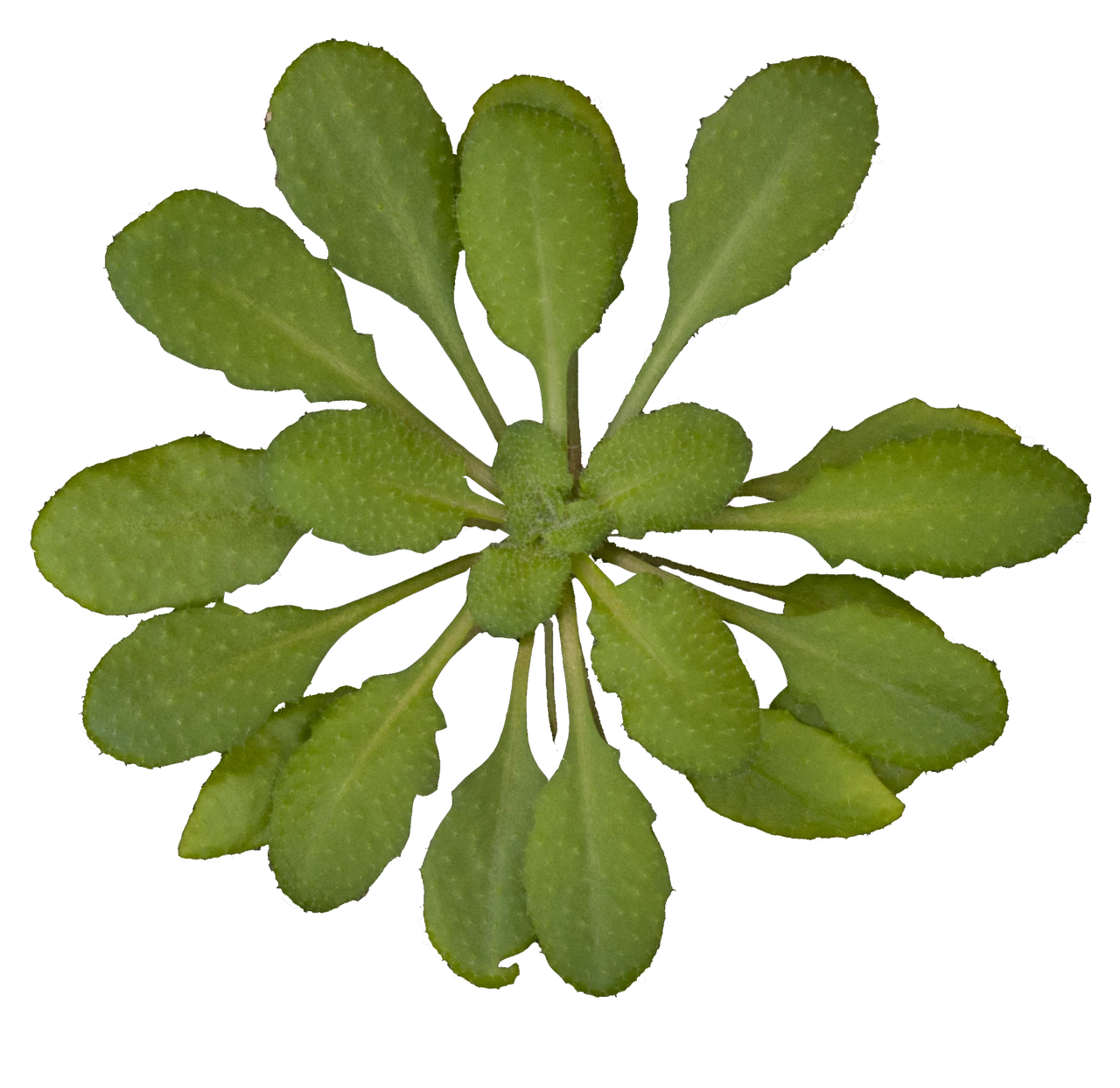
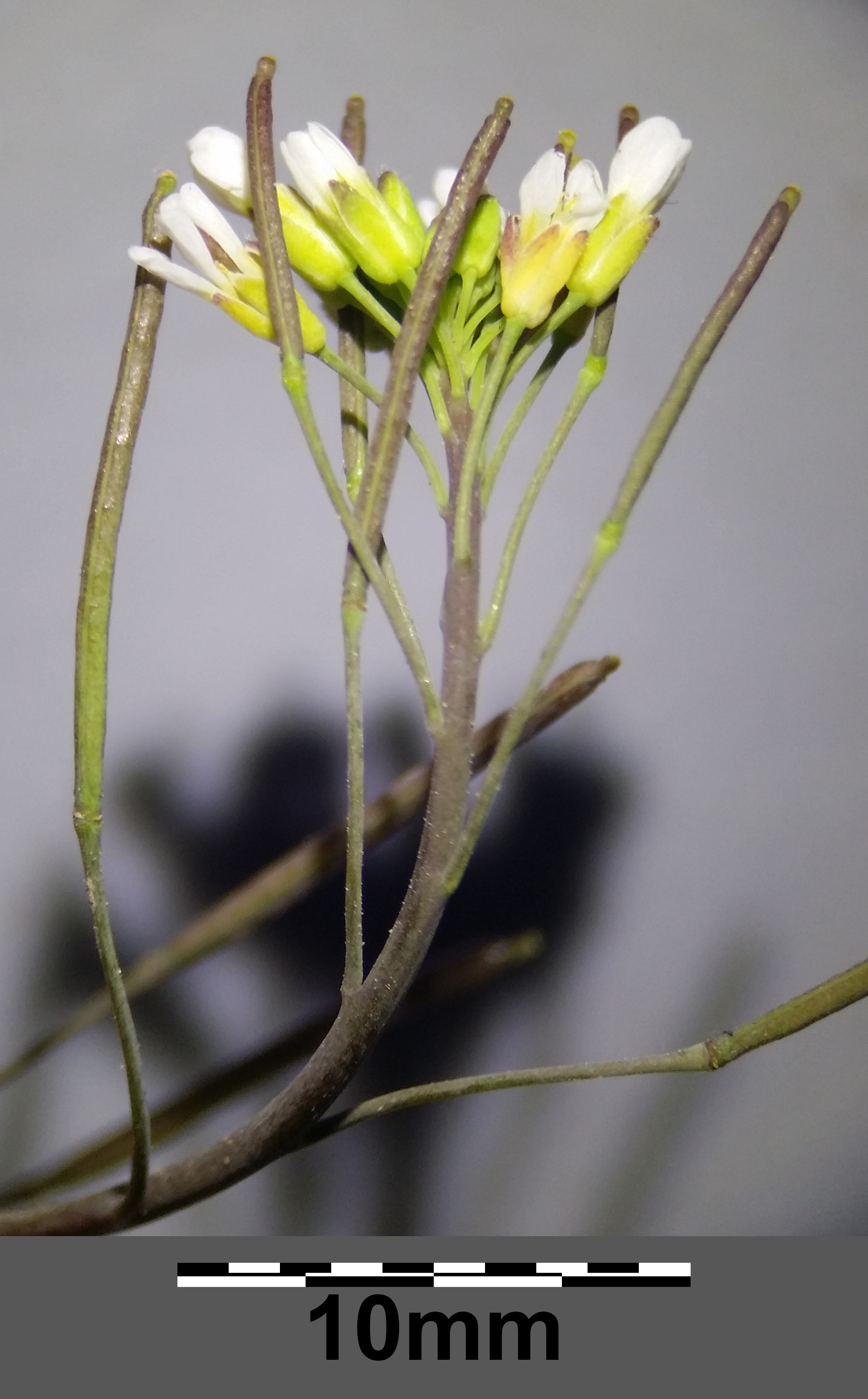
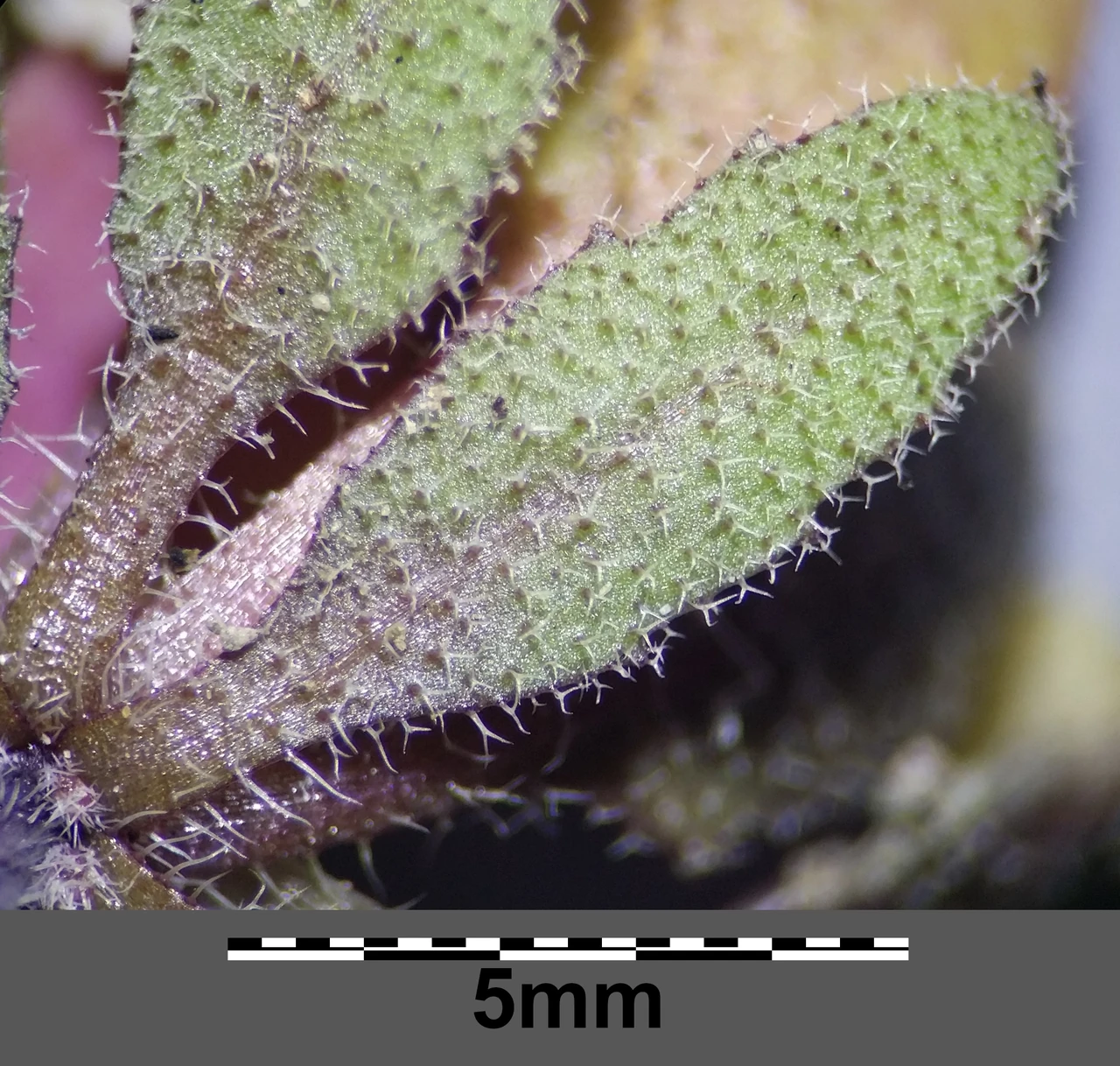
Arabidopsis: plant, leaf and flowers

Source and caption
Flowering plants in their habitat; other background species are present and roots are not visible.
SHA-256: 14a93955349e46eb080a7cbc9c0ce56f2be27e61e46c8757c86d12191c315056Original JPEG bytes retained; browser applies embedded EXIF orientation.

Source and caption
Leaf rosette; age and genotype are unspecified.
SHA-256: 3e2c633e63cc1919c9c03a265c455643863ea2a4984aa0e5561d7cec132c235aResized and encoded as WebP; original transparent background retained.

Source and caption
Flowers and developing fruits; the original 10 mm scale is retained.
SHA-256: 39089d4ef53fdff7f0c449bd0704311751ad96da09ab2e991d23d89e47cd61d3Original JPEG bytes retained; browser applies embedded EXIF orientation.

Source and caption
Basal leaf; the original 5 mm scale is retained.
SHA-256: 8f288e04a919f8146fa0f5b4f9a83960482bda597e0530ca1af831bb85990223Resized and encoded as WebP; original 5 mm scale retained.
These images show different specimens. Commons photographs do not establish a genotype, age or a link to the measured Col-0 leaves.
On this page
Introduction
Arabidopsis thaliana is a small annual flowering plant in the mustard family, Brassicaceae.
[1]It is both a wild plant of open ground and an experimental organism used to study plant growth and gene function.
[1]How to recognize the plant
A young plant forms a low rosette of leaves, followed by an upright flowering stem with fewer, smaller leaves.
[1]The basal leaves are often spoon-shaped and hairy, while the upper leaves are narrower and attached without a stalk.
[1]Its small flowers have four white petals, four sepals and six stamens.
[1]After flowering, narrow fruits called siliques hold small reddish-brown seeds.
[1]Reproduction and the annual cycle
Arabidopsis is predominantly self-fertilizing: pollen from a plant can fertilize its own flowers.
[2]This is sexual reproduction through pollen and fertilization, rather than the production of seed without fertilization.
[2]Research on different Arabidopsis accessions has linked self-fertility to independently arising changes in the system that otherwise rejects self-pollen.
[2]The annual plant eventually produces seed and dies, but its seasonal schedule is not a single fixed calendar.
[1]In studied wild populations in Sweden and Italy, seeds germinated in autumn and plants overwintered as rosettes before flowering.
[3]Evidence for this statement
Editorial synthesis
Flowering occurred earlier in the Italian population than in the Swedish population, illustrating why a local life cycle needs its environmental context.
[3]Evidence for this statement
Editorial synthesis
Where it grows and how populations differ
Kew places its native range across temperate Eurasia and into the mountains of tropical Africa, with introductions elsewhere.
[1]Recorded habitats include rocky or sandy open ground and disturbed places such as gardens and railway margins.
[1]A five-year reciprocal-transplant experiment compared plants originating from one Swedish and one Italian population at both home sites.
[3]Evidence for this statement
Editorial synthesis
The local plants had higher reproductive fitness in eight of ten site-by-year comparisons, with no significant difference in the other two.
[3]Evidence for this statement
Editorial synthesis
Here fitness was estimated from fruit production per planted seed or seedling, so the result describes those populations and that measure rather than every Arabidopsis population.
[3]Evidence for this statement
Editorial synthesis
Why researchers use it
Arabidopsis research connects changes in genes with measurable changes in an entire plant, including its growth and developmental timing.
[4]Boyes and colleagues established a growth-stage approach using Columbia plants and selected mutants, pairing early seedling observations with measurements of soil-grown plants.
[4]Such comparisons distinguish a change in development from a difference caused merely by observing plants at different stages.
[4]Reproductive mechanism and experimental scope
Boggs and colleagues introduced the Arabidopsis lyrata SRKb–SCRb gene pair into selected Arabidopsis thaliana accessions to test restoration of self-incompatibility.
[2]Their pollination assays assessed pollen-tube responses, and restoration differed between accession backgrounds.
[2]This links a reproductive phenotype to a particular recognition system without treating all accessions as genetically identical.
[2]What the field experiment establishes
The reciprocal-transplant study used one maternal line from each of two populations, with seeds planted in the first three years and seedlings in the final two.
[3]Evidence for this statement
Editorial synthesis
Differences in survival and reproduction supported local adaptation, but the experiment was not a survey of all native populations.
[3]Evidence for this statement
Editorial synthesis
Comparing developmental observations
The Boyes study combined a two-week seedling platform with soil-based measurements extending for approximately two months.
[4]These are experimental observation windows, not a species-wide promise of the number of days from seed to seed.
[4]The accessible publisher abstract identifies the study design but does not supply the detailed stage tables, so no stage-specific day counts are asserted here.
[4]Continue exploring
Sources and versions
Editorial draft · human review pending
- Kew POWO · urn:lsid:ipni.org:names:277970-1
2026-09-06 · Record components differ: flora/profile CC BY-NC-SA 3.0; backbone CC BY 3.0; individual photo copyright.
- PLOS Genetics · 10.1371/journal.pgen.1000426
2026-09-06 · Publisher states Creative Commons Attribution License; exact version not resolved here.
- New Phytologist/Wiley · 10.1111/j.1469-8137.2012.04112.x
2026-09-06 · Free access is not a blanket reuse license; no figures/data redistributed.
- The Plant Cell/Oxford Academic · 10.1105/TPC.010011
2026-09-06 · © 2001 American Society of Plant Biologists; standard publication model.
Inspect structured data
- Content version
- 4f7727b5e690eae6459d643397dd8bf0151b0d0049f8b981ce8003174596d06a
- Source version
- editorial-source-set.v1@dd5966b3d611d5896e6d85adac2d1b11bc22fb250d571db56d0a22b18e29b76e
- Updated
- 2026-09-06